GPC Operations Cell: gpc[at]unhcr.org
Gender-Based Violence: chase[at]unfpa.org
Child Protection: rpouwels[at]unicef.org
Housing, Land and Property: jim.robinson[at]nrc.no
Mine Action: unmasgeneva[at]un.org

The following protection analysis focuses on men and boys to ensure a comprehensive understanding of protection risks across all segments of the population, recognizing that crises affect people differently based on age, gender and other diversity, and that men and boys face distinct threats and vulnerabilities. This analysis seeks to strengthen inclusion while recognizing the continued, specific protection risks affecting women and girls. It also responds to growing concerns about the broader securitization of gender narratives, which can frame men and boys as threats rather than individuals with protection needs, and seeks to counter reductive assumptions by grounding analysis in protection data.
The protection environment for men and boys in the occupied West Bank, including East Jerusalem, has rapidly deteriorated since October 2023, shifting from chronic insecurity to acute and widespread exposure to violence, coercion, and deprivation.
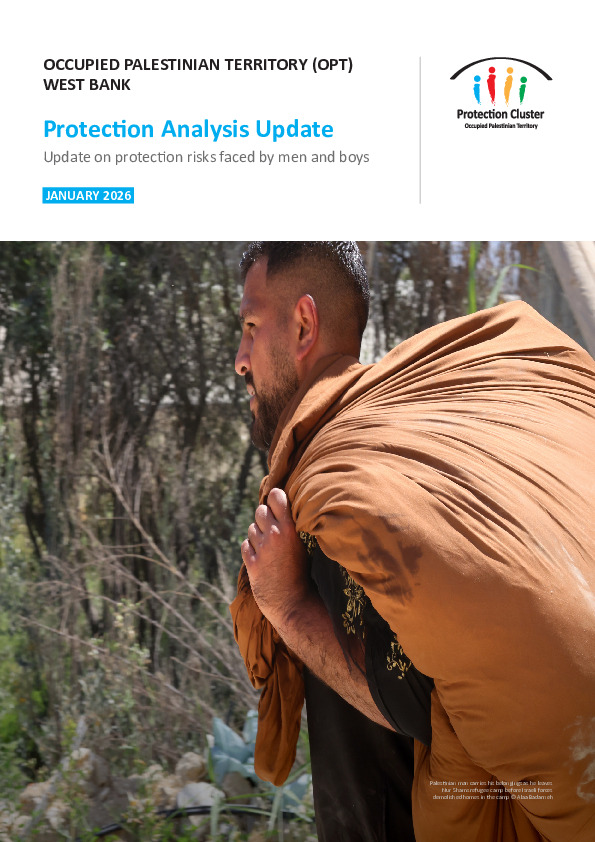
Palestinian men and boys face a concentrated and interlinked set of severe protection risks. They constitute over 99% of persons held in detention, including children held in indefinite administrative detention with limited legal safeguards, reflecting the systematic targeting of adult men and adolescent boys with deprivation of liberty. Israeli authorities have deliberately imposed detention conditions that amount to torture and other forms of ill-treatment, including growing cases of sexual violence against men and boys, resulting in severe and long-lasting physical and psychosocial harm and, in many cases, death in custody. The excessive use of force by Israeli forces has led to exceptionally high rates of death and injury – 97% men and boys – indicating systematic unlawful and discriminatory targeting and a process of gendered securitization by Israel whereby male identity is construed to justify resort to force, including lethal force. Expanding movement and access restrictions, including checkpoints, roadblocks, and closures, function as a compounding risk, limiting men and boys’ freedom of movement while intensifying exposure to violence and blocking access to essential services. Across all risks, Israeli forces have exploited gender norms to inflict dignity-related harm and abuse intended to humiliate men and boys, erode social fabric, and induce displacement of communities.
These risks are driven by a mutually reinforcing set of threats and stress drivers that together create a coercive and increasingly severe protection environment. Israeli militarized operations have intensified in scale and geographic reach since October 2023, increasingly employing war-like tactics in law-enforcement contexts, particularly in refugee camps and urban centres. In parallel, settler violence has escalated sharply in both frequency and severity alongside rapid illegal settlement and outpost expansion, exposing men and boys to direct physical harm, intimidation, and forced displacement in a context of limited accountability. Deepening economic deprivation, driven by permit revocations, movement restrictions, and asset destruction, disproportionately affects men as primary income earners and increases reliance on harmful coping strategies including child labour among boys. These factors interact with gender norms that compound exposure to harm for men and boys while undermining help-seeking and access to services.
The protection risks faced by men and boys requiring immediate attention are:
1. Arbitrary or unlawful arrest and/or detention
2. Excessive use of force
3. Torture or cruel, inhuman, degrading treatment or punishment
4. Unlawful impediments and restrictions on freedom of movement
5. Psychological/emotional abuse or inflicted distress