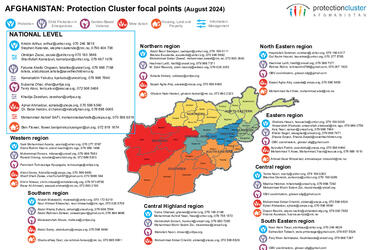
GPC Operations Cell: gpc[at]unhcr.org
Gender-Based Violence: chase[at]unfpa.org
Child Protection: rpouwels[at]unicef.org
Housing, Land and Property: jim.robinson[at]nrc.no
Mine Action: unmasgeneva[at]un.org

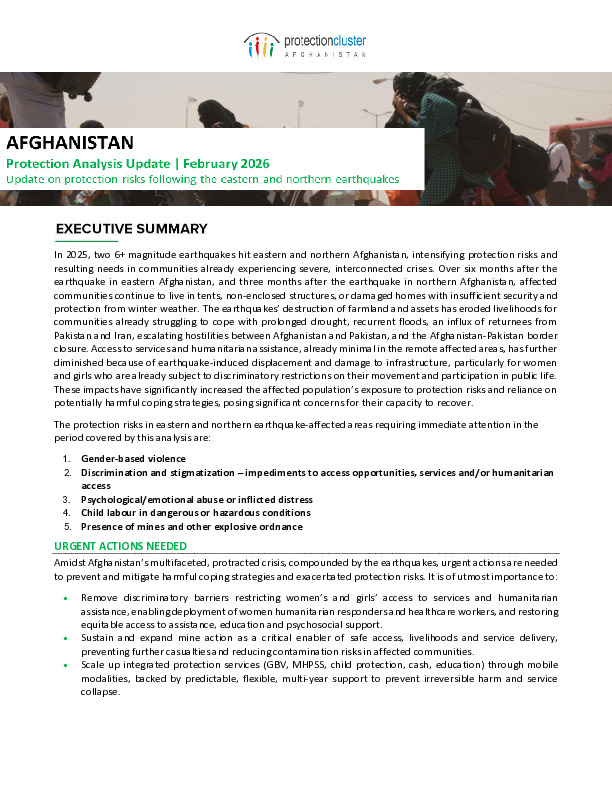
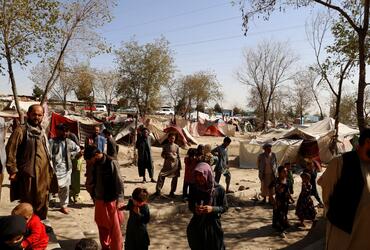
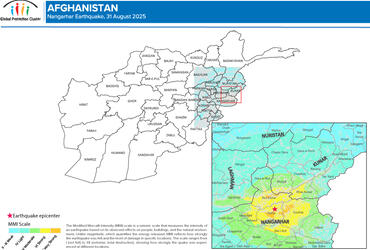
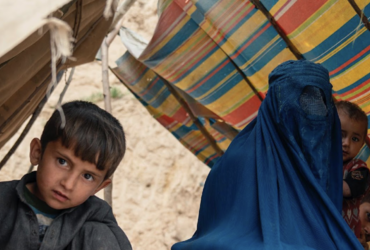
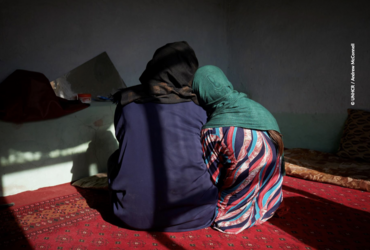
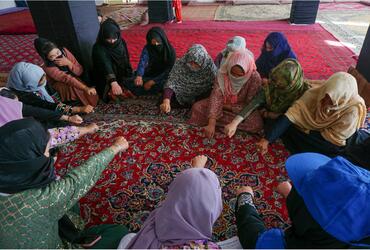
In 2025, two 6+ magnitude earthquakes hit eastern and northern Afghanistan, intensifying protection risks and resulting needs in communities already experiencing severe, interconnected crises. Over six months after the earthquake in eastern Afghanistan, and three months after the earthquake in northern Afghanistan, affected communities continue to live in tents, non-enclosed structures, or damaged homes with insufficient security and protection from winter weather. The earthquakes’ destruction of farmland and assets has eroded livelihoods for communities already struggling to cope with prolonged drought, recurrent floods, an influx of returnees from Pakistan and Iran, escalating hostilities between Afghanistan and Pakistan, and the Afghanistan-Pakistan border closure. Access to services and humanitarian assistance, already minimal in the remote affected areas, has further diminished because of earthquake-induced displacement and damage to infrastructure, particularly for women and girls who are already subject to discriminatory restrictions on their movement and participation in public life. These impacts have significantly increased the affected population’s exposure to protection risks and reliance on potentially harmful coping strategies, posing significant concerns for their capacity to recover.
The protection risks in eastern and northern earthquake-affected areas requiring immediate attention in the period covered by this analysis are:
1. Gender-based violence
2. Discrimination and stigmatization – impediments to access opportunities, services and/or humanitarian access
3. Psychological/emotional abuse or inflicted distress
4. Child labour in dangerous or hazardous conditions
5. Presence of mines and other explosive ordnance