
GPC Operations Cell: gpc[at]unhcr.org
Gender-Based Violence: chase[at]unfpa.org
Child Protection: rpouwels[at]unicef.org
Housing, Land and Property: jim.robinson[at]nrc.no
Mine Action: unmasgeneva[at]un.org

Summary
Civilians in El Obeid and surrounding areas face escalating protection risks due to intensified hostilities, drone attacks, restricted movement, displacement, and the collapse of essential services. Humanitarian access remains severely constrained, increasing risks for women, children, and other vulnerable groups.
Situation Overview
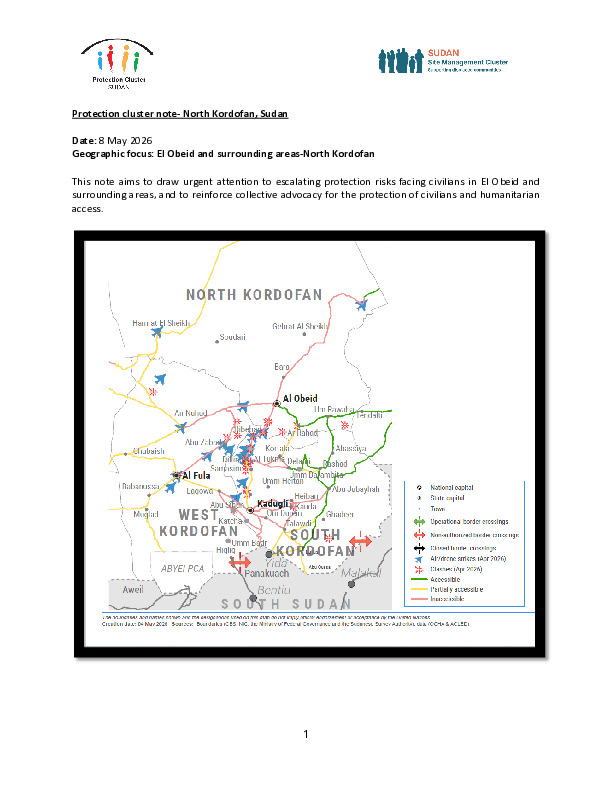
El Obeid remains under SAF control but is increasingly isolated by insecurity and RSF presence along key routes. Recent weeks have seen intensified drone strikes and attacks affecting populated areas and civilian infrastructure, signaling a shift toward sustained remote warfare in urban settings.
Access routes to El Obeid are highly restricted, with only the eastern corridor toward White Nile State partially functional and increasingly fragile. Market disruptions, inflation, shortages of basic goods, and overstretched services continue to worsen conditions for civilians.
North Kordofan hosts more than 231,000 IDPs (DTM figures), with displacement continuing toward El Obeid. Overcrowded shelters, informal sites, and deteriorating living conditions are heightening protection concerns ahead of the rainy season.
Main Protection Risks:
Urgent, coordinated action is needed to protect civilians, ensure safe movement and humanitarian access, and prevent further harm amid ongoing conflict and displacement. Increased investment in protection services and community-based mechanisms is critical to address growing risks and improve conditions for affected populations in Kordofan.