Protection risks impacting on the lives of millions are complex and need shared understanding and cooperation among everyone involved in humanitarian work – including a meaningful role for local actors and affected communities. Although global policies stress the importance of analyzing protection risks and humanitarian needs from the point of view of those most affected, the voices of crisis-affected people and their organizations are often left out when prioritizing, interpreting, and making decisions based on the analysis. In recent years, there have been efforts to improve how protection analysis is done and used within interagency spaces, including the HNRPs; however, there has been an evident gap in meaningfully inclusion of local actors within this process. Similarly, the Humanitarian Planning Cycle Discussion highlights that delivering a fully inclusive and accountable process, demands both ‘meaningful, continuous engagement with crisis-affected communities in all their diversities to ensure the HNRP reflects people’s priorities, capacities and preferences’ and ‘engagement of NGOs (INGOs and L/NNGOs) throughout the process’ and at critical junctures. Yet there are structural, organizational and context-specific challenges requiring a specific focus and understanding.
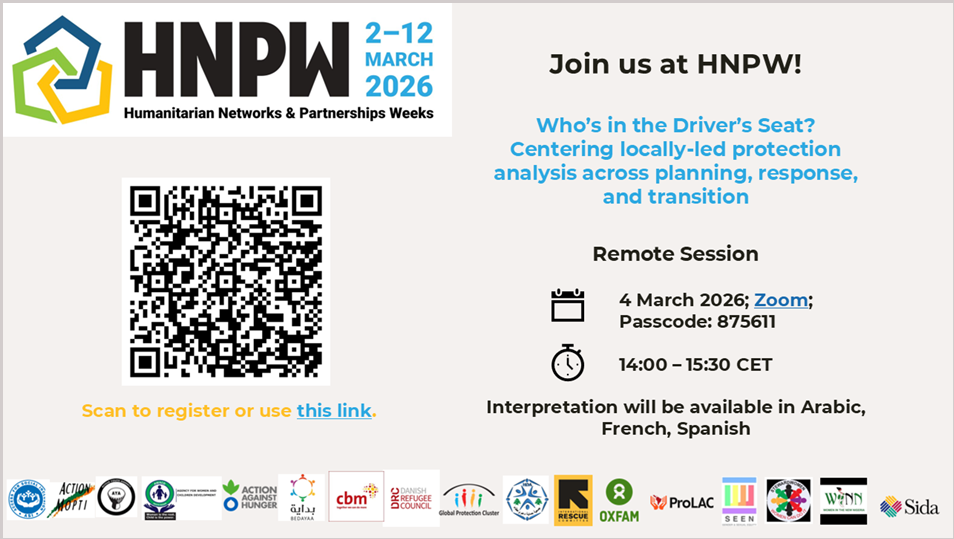
To address this gap in learning, the Protection Analysis Local Actor Network (PALAN) convened by IRC, in collaboration with the Global Protection Cluster, Community led Protection Community of Practice, Disability Reference Group, CBM, DRC, ProLAC, ACF and other collaborating agencies have undertaken a structured global learning exercise with a diversity of contexts and types of ‘local’ actors engaged in and leading contextual analysis of protection risks facing crisis-affected populations. This event aims to share insights, promising practices, priorities and recommendations from local actors to advance more inclusive and locally-led protection analysis in interagency strategic planning and response
