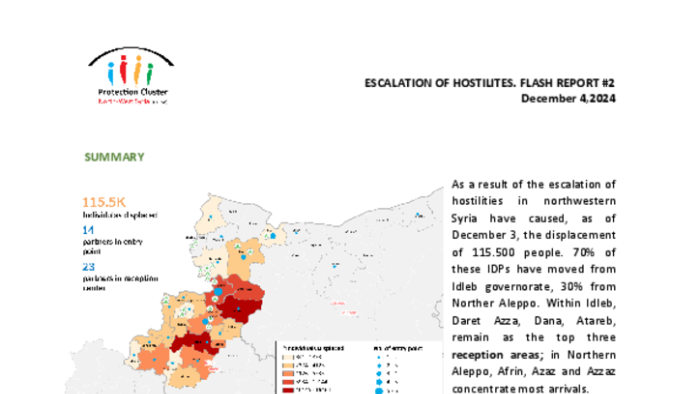
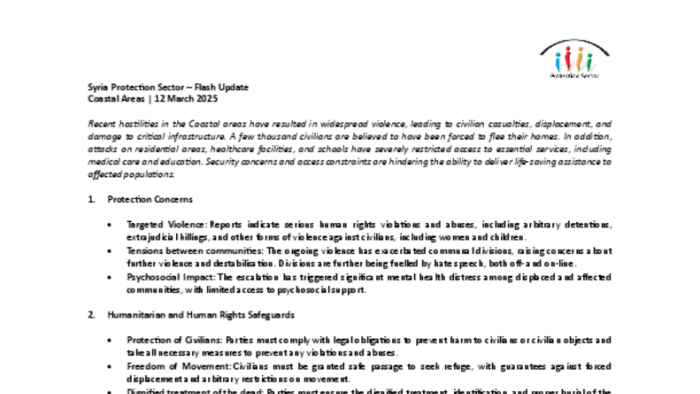
Protection Issues
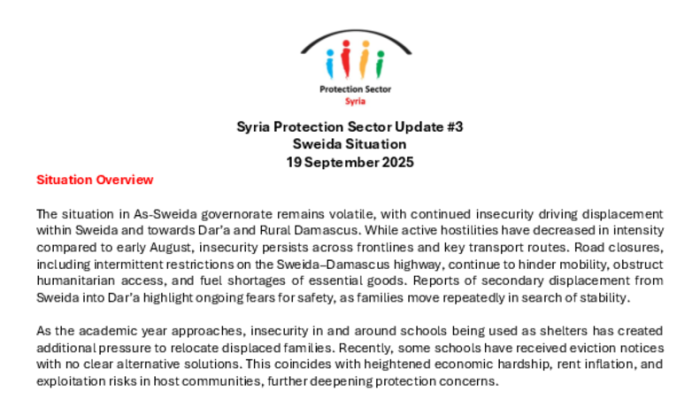
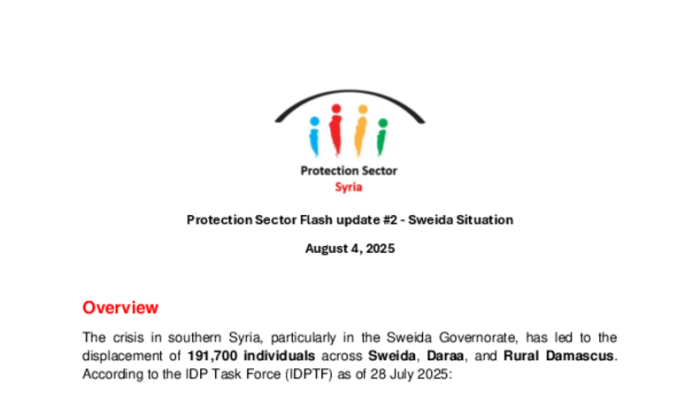
After more than a decade of conflict, people across Syria continue to face severe and overlapping protection risks driven by insecurity, displacement, economic decline, explosive ordnance contamination, damaged infrastructure, weakened institutions, and limited access to basic services. Ongoing hostilities, localized violence, and intercommunal tensions continue to expose civilians to killings, arbitrary detention, movement restrictions, discrimination, family separation, and housing, land and property (HLP) disputes.
The return of refugees and internally displaced persons (IDPs) has created additional protection challenges. While many Syrians seek to return, significant barriers remain, including insecurity, the presence of unexploded ordnance (UXO) and explosive remnants of war (ERW), damaged housing, unresolved HLP issues, limited access to civil documentation, inadequate services, livelihood constraints, and concerns related to safety and social cohesion. These challenges undermine the sustainability of returns and increase the risk of secondary displacement.
Women and girls remain exposed to heightened risks of gender-based violence, including domestic violence, early and forced marriage, and exploitation. Children continue to face child labour, psychosocial distress, family separation, and recruitment and use by armed actors. Persons with disabilities, older persons, minority groups, and other vulnerable populations remain disproportionately affected by exclusion and protection risks. Economic hardship and limited access to services have increased reliance on negative coping mechanisms, including child labour, early marriage, unsafe migration, survival sex, and debt. Population movements, competition over scarce resources, and the legacy of conflict continue to fuel community tensions, underscoring the need for social cohesion and peaceful coexistence initiatives.
The Protection Sector supports coordinated interventions to prevent and respond to protection risks, through joint protection monitoring efforts, strengthen community-based protection, support access to documentation and HLP rights, mitigate explosive ordnance risks, promote social cohesion, facilitate safe, voluntary, informed and dignified returns, and advocate for the protection of civilians and respect for international humanitarian and human rights law.
Humanitarian Needs and Response Plan in 2026
About the Protection Cluster
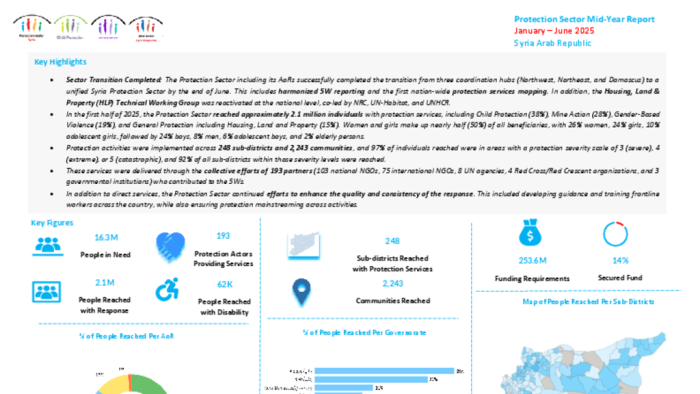
The Protection Cluster (Sector) in Syria was activated to respond to the protection needs of persons affected by conflict and disasters and to ensure the coordination of protection interventions in emergencies. Since June 2025, the Syria Protection Sector has operated as one country-wide cluster after the Northwest Syria Protection Cluster and the Northeast Syria Protection Working Group were deactivated. The Protection Sector is led by the United Nations High Commissioner for Refugees (UNHCR) and co-coordinated by the International Rescue Committee (IRC) and includes Gender-Based Violence (GBV), Child Protection (CP), Mine Action (MA), and Housing, Land, and Property Technical Working Groups
Coordination Team

Protection Sector Coordinator
limg@ unhcr.org
Protection Cluster Co Coordinator
Assistant Protection Sector Coordination Officer
Protection Officer
Information Management Associate
Child Protection Lead
Child Protection Information Management
Gender-Based Violence Lead
Information Management Associate
[email protected]
Mine Action Lead
[email protected]
Mine Action Co-Lead
Mine Action Information Management
HLP Thematic Lead
Protection Monitoring Dashboard