Protection Issues
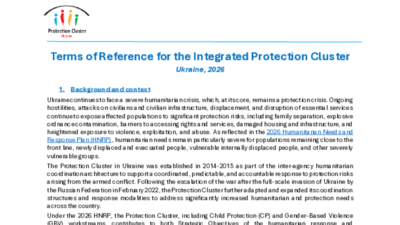
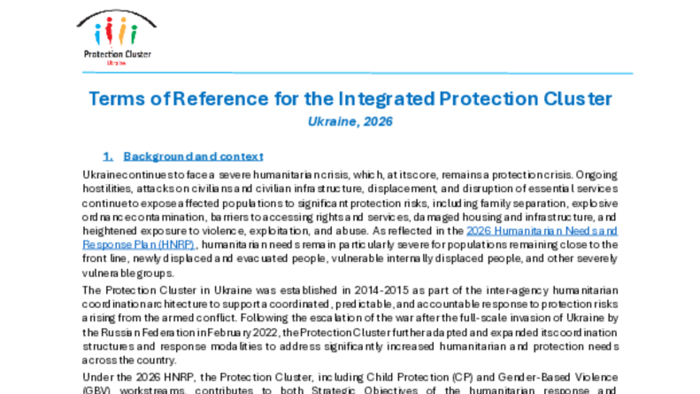
Ukraine has been embroiled in political strife and armed conflict since 2014. Since then, a humanitarian and protection crisis precipitated in the Donetska and Luhanska region. The protracted nature of the crisis contributed to a crumbling economy and heightened humanitarian needs of civilians living in these regions. The experience of COVID-19 further incapacitated an already war-weary population and served to compromise the operational environment for humanitarian and protection actors. In this context, the outbreak of the violence in February 2022, expanded the impact of the crisis to newer regions with rapidly deteriorated conditions for already struggling populations. This magnified the need for assistance at an unprecedented rate. Since the escalation of hostilities, it is estimated that 7.7 million people are internally displaced, which is equivalent to 17.5 percent of the entire population. The renewed hostilities have contributed to extreme human suffering with civilians killed, injured, experiencing daily violence and bombardments. The humanitarian and protection situation is worrying. Thousands of civilians have been innocent victims of the conflict—losing loved ones and homes. Schools, hospitals, care institutions and entire cities destroyed. Internally displaced persons are facing immense shortages of food, water, basic items and energy and lack access to health services and medication. Multiple forms of gender-based violence is being reported as women and girls are on the move through vulnerable crossing points along with high risks of trafficking in persons. Numerous children have been separated from their families making them vulnerable to risks of trafficking and abuse as well. With the shrinking possibilities of care and support, older persons and those with disabilities are finding them constrained to flee active conflict zones.
Humanitarian Needs and Response Plan in 2026
About the Protection Cluster
The Protection Cluster in Ukraine was activated in 2014 to ensure the coordination of protection interventions in emergencies and to respond to the protection needs of persons affected by conflict and disasters. The Protection Cluster is led by the United Nations High Commissioner for Refugees (UNHCR) and co-coordinated by Right to Protection (R2P), a national NGO. It includes a Gender-Based Violence Workstream and a Child Protection Workstream. In addition, the Protection Cluster hosts an Age and Disability Working Group, a Housing, Land and Property Working Group, and a LGBTIQ Communities Technical Working Group. Overall, the Protection Cluster has over 100 partners.
Coordination Team

Protection Cluster Coordinator
Information Management Officer
Gender Based Violence Lead
Child Protection Lead
2026 Response Dashboard