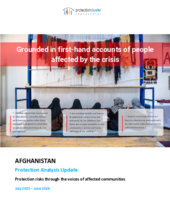
Drawing on more than 1,200 focus group discussions with women and men across Afghanistan, this Protection Analysis Update places affected communities’ first-hand accounts at the centre of the analysis. It examines how discriminatory laws and policies, large-scale forced returns, conflict, natural hazards and chronic poverty interact to deepen protection risks and undermine people’s safety, dignity and livelihoods.
Communities describe how restrictions on women’s and girls’ education, employment and freedom of movement limit access to essential services and assistance, with consequences for entire families. More than 2.85 million Afghans returned from Iran and Pakistan during the reporting period, many under duress. Their protection needs extend beyond border reception, as barriers to documentation, housing, livelihoods and services hinder reintegration and place further pressure on already overstretched host communities.
The update identifies five priority protection risks:
- Gender-based violence;
- Discrimination and denial of access to resources, services and opportunities;
- Hazardous child labour and exploitation;
- Mines and other explosive ordnance;
- Psychological and emotional abuse and inflicted distress.
Despite growing needs, funding cuts and restrictions on humanitarian operations are reducing access to critical protection services.
Grounded in community perspectives, the analysis calls for urgent action to reverse restrictions on women and girls, ensure safe and equitable access to assistance, support voluntary, safe, dignified and sustainable returns, and restore essential protection services. It sets out recommendations for authorities, humanitarian and basic human needs actors, donors and Member States.
Read the full update for community perspectives, detailed protection analysis and recommended actions.