Protection Issues
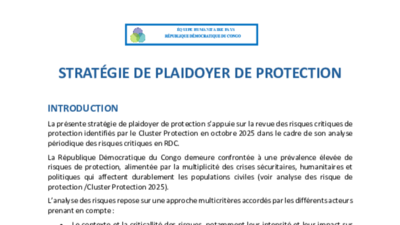
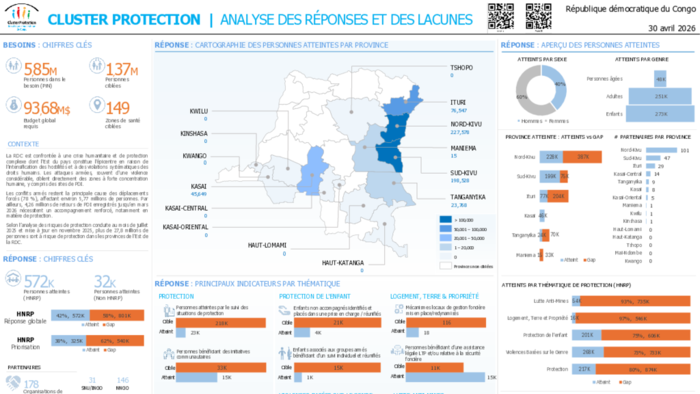
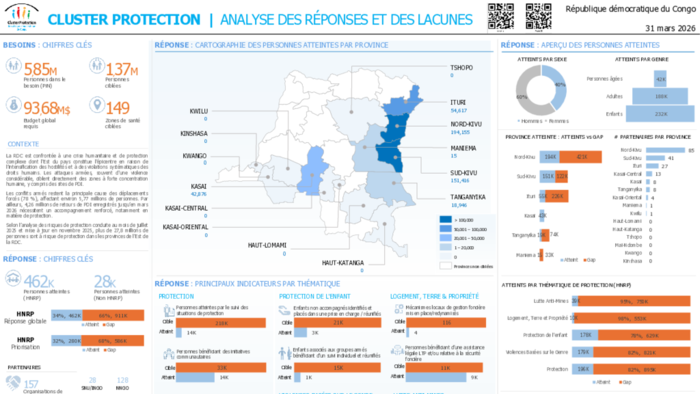
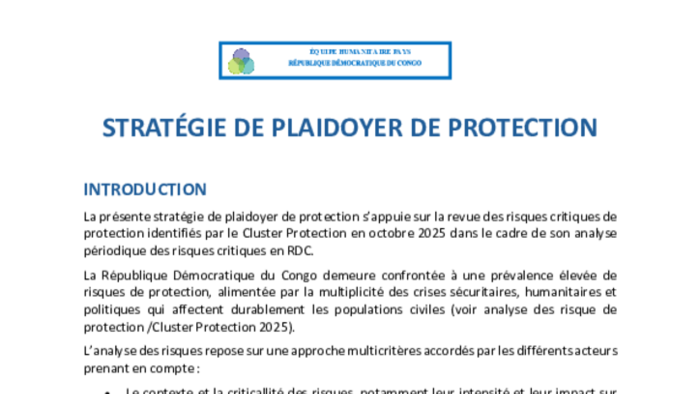
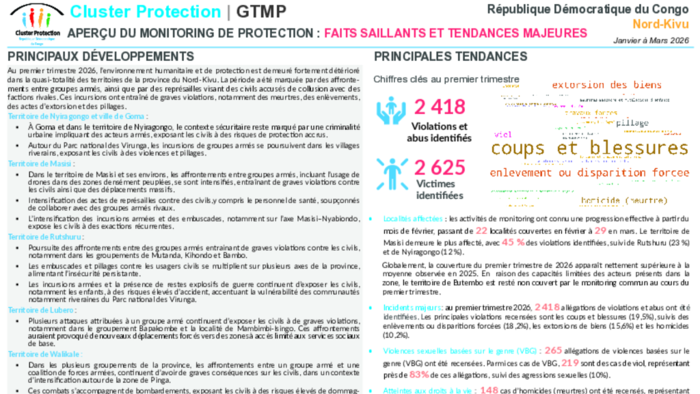
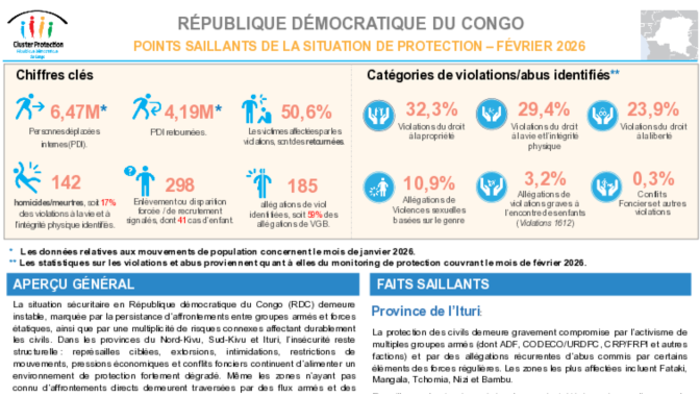
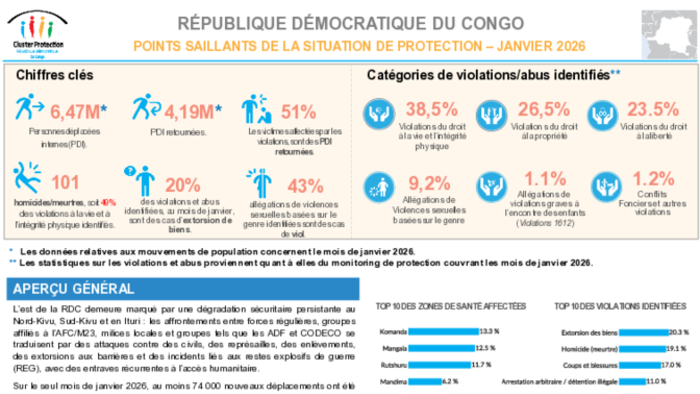
The Democratic Republic of the Congo remains one of the world’s most complex and protracted humanitarian crises, marked by persistent armed conflict, massive displacement, climate-related shocks, and recurrent epidemics. In the eastern part of the country, the conflict continues to devastate lives and communities. In 2025, the expansion of territory controlled by the Alliance Fleuve Congo/Mouvement du 23 Mars (AFC/M23) in the provinces of North Kivu and South Kivu, including the capture of the cities of Goma, Bukavu, and Uvira, has triggered further displacement while also pressuring hundreds of thousands of displaced families to return to areas that remain highly unstable and insecure. At the same time, violence persists in Ituri, Maniema, Tshopo, Tanganyika and ex-Bandundu provinces, where attacks by armed groups, intercommunity tensions, and retaliatory violence have devastated entire villages. The protection environment is marked by severe and overlapping risks, notably gender-based violence, attacks against civilians and civilian infrastructure, unlawful killings, theft and extortion, forced evictions and destruction of personal property, as well as the recruitment and use of children by armed groups. The crisis has also inflicted profound psychological and emotional harm on affected populations, further compounding vulnerabilities and humanitarian needs.
Humanitarian Needs and Response Plan in 2026
About the Protection Cluster
The Protection Cluster in Democratic Republic of Congo (DRC) was activated in 2006 to ensure a coherent and effective protection response for affected populations. It is led by the United Nations High Commissioner for Refugees (UNHCR) and co-coordinated by the Norwegian Refugee Council (NRC). The Cluster includes thematic working groups on Gender-Based Violence, Child Protection, and Mine Action. It has 177 partners.
Coordination Team

Protection Cluster Coordinator
Protection Cluster Co-Coordinator
Information Management Officer
Gender-Based Violence Lead
Child Protection Lead
Mine Action Lead
Outil de coordination et de gestion de l'information