

About the Issue
Human rights are at the core of humanitarian crises. Humanitarian crises may be triggered by human rights abuses and violations, or once they occur, human rights concerns drive further harm and suffering for affected populations. Protection risks themselves are driven by and reflect failures by duty bearers to respect, protect and fulfill human rights. Given the close relationship between human rights and protection, integrating human rights considerations into humanitarian and protection planning, preparedness, response and recovery efforts is essential. Operational and advocacy related efforts to protect human rights are imperative during conflict and disaster settings, as they help safeguard people from violence, deprivation, abuse and other human rights breaches while also potentially advancing accountability for such harms occur. The integration of human rights considerations in protection analysis helps the Protection Cluster better understand what or who is driving harm and how different communities and populations are affected by protection risks. It supports more effective and inclusive aid by ensuring that response efforts can better address the root causes of protection risks and humanitarian needs while reaching the most marginalized, guided by rights-based approaches in protection programming and advocacy. Importantly, human rights actors play an important role as members of Protection Clusters and partners in protection efforts. By working together, protection and human rights actors can take collaborative and complementary approaches to complex issues, building on their respective strengths while managing risks for operational partners.
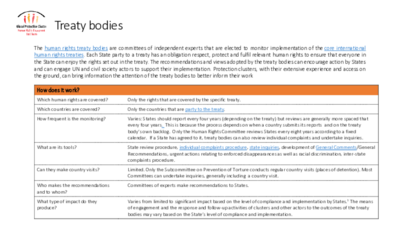
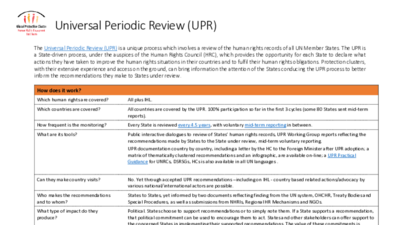
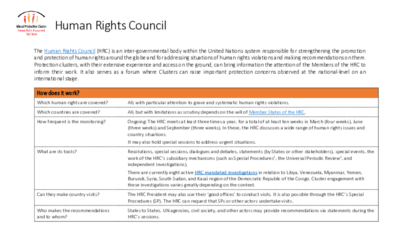
Human rights engagement can also involve working with human rights mechanisms to support protection outcomes. These mechanisms exist at national and global levels, ranging from national human rights institutions that monitor domestic human rights situations and investigate abuses, to international bodies such as the Human Rights Council and processes like the Universal Periodic Review. They can serve as important channels for advancing protection advocacy efforts – for example by supporting documentation, reporting and raising the visibility of protection risks, or by providing avenues for advocacy and accountability with governments, including to strengthen domestic laws and policies that better protect crisis-affected communities.
Protection Clusters and their members play a leading role in bringing human rights into humanitarian action. However, gaps in information sharing, coordination and collaboration still exist across different contexts, which can limit how effectively both the protection and human rights sectors work together to fully support the protection of crisis-affected people. The Global Protection Cluster, national and sub-national protection clusters and OHCHR have been working to support the more systematic integration of human rights analysis and considerations in protection analysis, HCT protection strategies and HNRPs, as well as into programmatic response and protection advocacy.
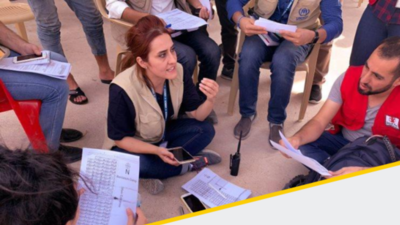

Training Series on Human Rights Engagement
8 modules with facilitator's guides and presentations

