.jpg)
Protection Issues
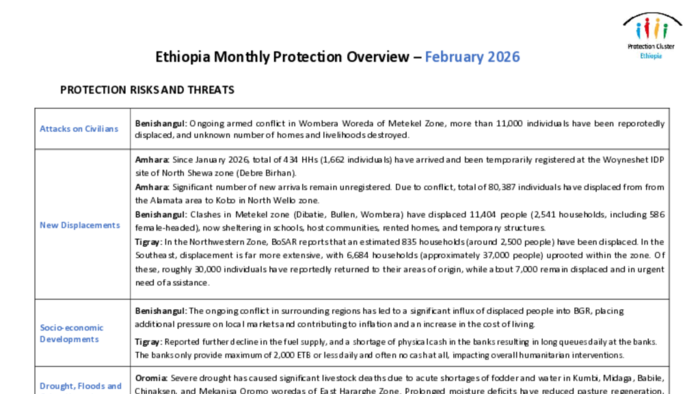
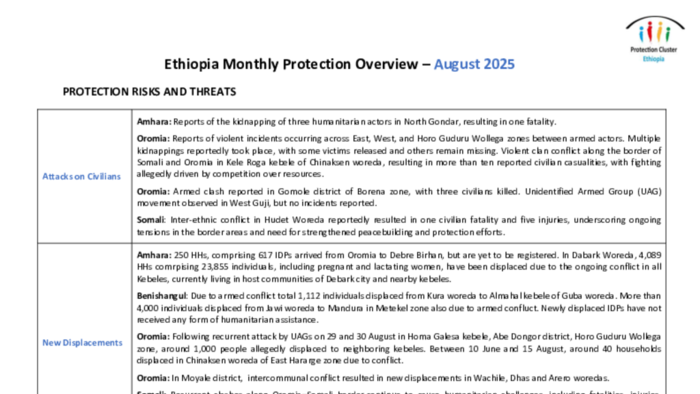
Ethiopia continues to face a complex and multidimensional protection crisis driven by armed conflict, intercommunal violence, climate-related shocks, displacement, disease outbreaks, and economic pressures. Protection risks remain acute across Tigray, Amhara, Afar, Oromia, Benishangul-Gumuz, Gambella, Somali, and parts of the Southern regions, with each context shaped by a combination of insecurity, recurrent displacement, food insecurity, drought, floods, and limited access to services.
Communities affected by conflict and displacement continue to face threats to physical safety, movement restrictions, family separation, psychosocial distress, and barriers to accessing humanitarian assistance and basic services. The presence of explosive ordnance and other conflict-related remnants further constrains safe access to farmland, grazing areas, water points, and essential community infrastructure, limiting livelihoods and increasing protection risks. Women and girls face heightened risks of gender-based violence, while children remain exposed to family separation, psychosocial harm, child labour, and interruption of education. Older persons, persons with disabilities, and marginalized groups often face discrimination, exclusion, and challenges accessing assistance and protection services.
In several regions, repeated displacement and returns have increased tensions over housing, land and property, access to natural resources, and livelihoods. Climate shocks, particularly drought and flooding in Somali, Afar, Oromia, and Southern areas, continue to deepen vulnerabilities and erode community coping capacities. In western regions, including Benishangul-Gumuz and Gambella, insecurity and cross-border dynamics further compound protection concerns.
Humanitarian access constraints, insecurity, and funding limitations continue to affect the availability and continuity of protection services. Strengthening community-based protection, protection coordination, accountability to affected populations, and the centrality of protection across the humanitarian response remains critical.
About the Protection Cluster
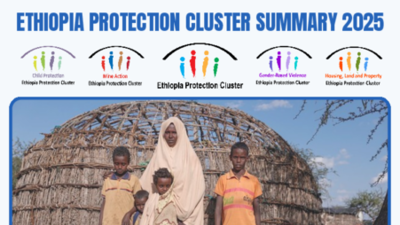
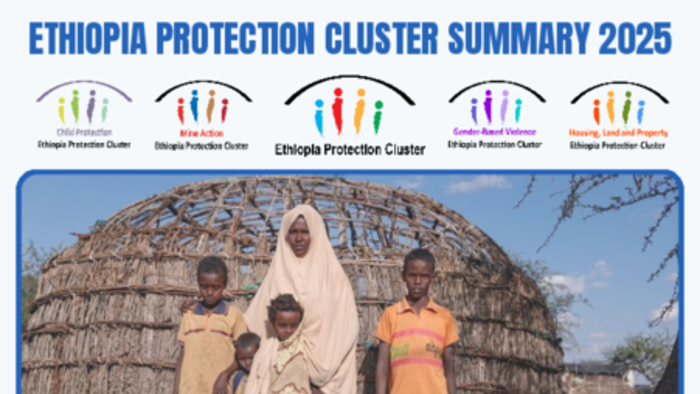
The Ethiopia Protection Cluster was activated in 2008 to coordinate protection responses for populations affected by conflict, displacement, climate-related shocks, and other humanitarian emergencies. Led by UNHCR and co-led by the Danish Refugee Council in collaboration with government, including the Ministry of Women and Social Affairs (MoWSA), and humanitarian partners, the Cluster supports protection analysis, coordination, advocacy, and service delivery across humanitarian responses in Ethiopia. The Protection Cluster is composed of specialized coordination structures, including the Child Protection Technical Working Group (CP TWG), the Gender-Based Violence Technical Working Group (GBV TWG), the Housing, Land and Property Technical Working Group (HLP TWG), and the Mine Action Technical Working Group (MA TWG).
Coordination Team

Protection Sector Coordinator
Protection Sector Co-Coordinator
Protection Sector Information Management
Child Protection Lead
Gender-Based Violence Lead
Gender-Based Violence Information Management
HLP Thematic Lead
Mine Action Lead
Protection Risks Dashboard